
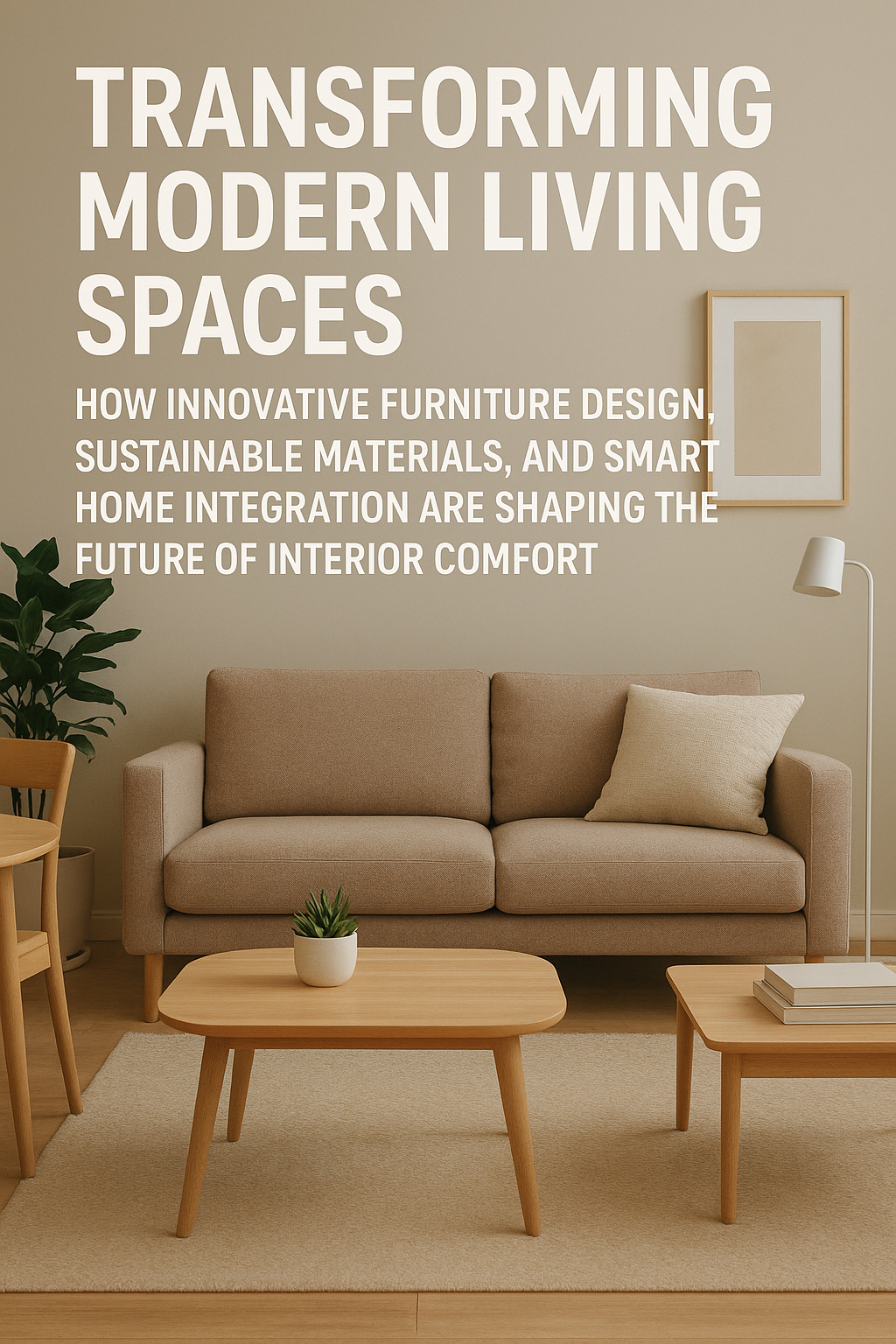
In recent years, the world of interior design has undergone a remarkable transformation, fueled by rapid technological advancements, heightened environmental awareness, and an evolving understanding of how people want to live. Modern consumers are no longer satisfied with furniture that simply fills a space. Instead, they seek furnishings that enhance comfort, support sustainability, and integrate seamlessly with the growing ecosystem of smart home technologies. This shift has given rise to a new era in which innovative design, eco-friendly materials, and intelligent connectivity converge to redefine modern living spaces.
At the core of this evolution is the increasing emphasis on multifunctional furniture. Urbanization has led to smaller living spaces, creating a demand for pieces that serve multiple purposes without compromising aesthetics. Designers are responding with creative solutions such as foldable dining tables, modular sofas, wall-mounted desks, and beds with built-in storage. These pieces offer flexibility, allowing homeowners to effortlessly transform their rooms to adapt to work, leisure, and relaxation. The modern home is no longer static; it is designed to evolve with its inhabitants’ lifestyles.
Alongside multifunctionality, the rise of innovative design techniques is reshaping how furniture is conceptualized and produced. Computational design, 3D printing, and digital modeling have opened doors to forms and structures that were once impossible or too costly to manufacture. Designers can now test durability, ergonomics, and aesthetics through virtual prototypes before creating the final product. This reduces material waste and accelerates the design process, contributing to more efficient production cycles. As a result, the furniture industry is seeing an influx of bold, sculptural pieces that balance beauty with practicality.
Another major trend steering the future of furniture is the shift toward sustainable materials and eco-conscious manufacturing. With climate concerns growing worldwide, consumers and industries are prioritizing environmental responsibility. Furniture brands are increasingly using renewable, recyclable, and responsibly sourced materials such as bamboo, rattan, reclaimed wood, and biodegradable bioplastics. Some designers even incorporate waste materials—like ocean plastics or industrial scraps—into their creations, turning discarded resources into functional art.
Sustainability extends beyond the materials themselves. Many manufacturers are adopting greener production methods, including energy-efficient processes, water-saving technologies, and low-VOC (volatile organic compound) finishes. Moreover, the concept of the circular economy is gaining traction, encouraging furniture companies to design products that can be disassembled, repaired, or recycled at the end of their lifespan. This shift not only reduces environmental impact but also fosters long-term value for consumers.
However, perhaps the most transformative force in modern furniture is the growing integration of smart home technology. As homes become more connected, furniture is evolving to complement and support digital living. Smart beds now track sleep patterns and adjust positioning for optimal comfort. Desks come equipped with integrated wireless charging, cable management systems, and adjustable settings controlled through mobile apps. Even lighting and climate control features are being embedded into furniture, creating an environment that adapts automatically to the user’s needs.
One particularly exciting development is the rise of AI-enhanced furniture. Using sensors and machine-learning algorithms, these pieces can monitor usage patterns and make real-time adjustments. For example, smart sofas can detect posture and adjust lumbar support, while kitchen counters can display nutritional information or recipes based on ingredients placed on their surface. As AI continues to advance, the line between furniture and digital assistants will become increasingly blurred.
Yet, despite the technological sophistication of modern furniture, comfort and human experience remain at the heart of every innovation. Designers are focusing on ergonomics, sensory comfort, and emotional well-being. Soft textures, natural materials, warm colors, and organic shapes are being carefully selected to create calming atmospheres in homes that often double as workplaces. This holistic approach acknowledges the psychological impact of interior environments and strives to promote balance, relaxation, and inspiration.
Looking ahead, the future of interior comfort will be defined by the harmonious blend of innovation, sustainability, and smart technology. Furniture will continue to evolve as a dynamic part of the home—responsive, eco-friendly, and deeply attuned to the needs of its users. Whether it’s through cutting-edge materials, adaptive designs, or intelligent functionality, the next generation of furniture promises to enhance the way we live, work, and connect with our surroundings.
In this rapidly changing landscape, one thing is certain: modern living spaces are no longer just about style. They are about creating environments that prioritize comfort, sustainability, and intelligent design—shaping a future where our homes are as smart and adaptable as we are.